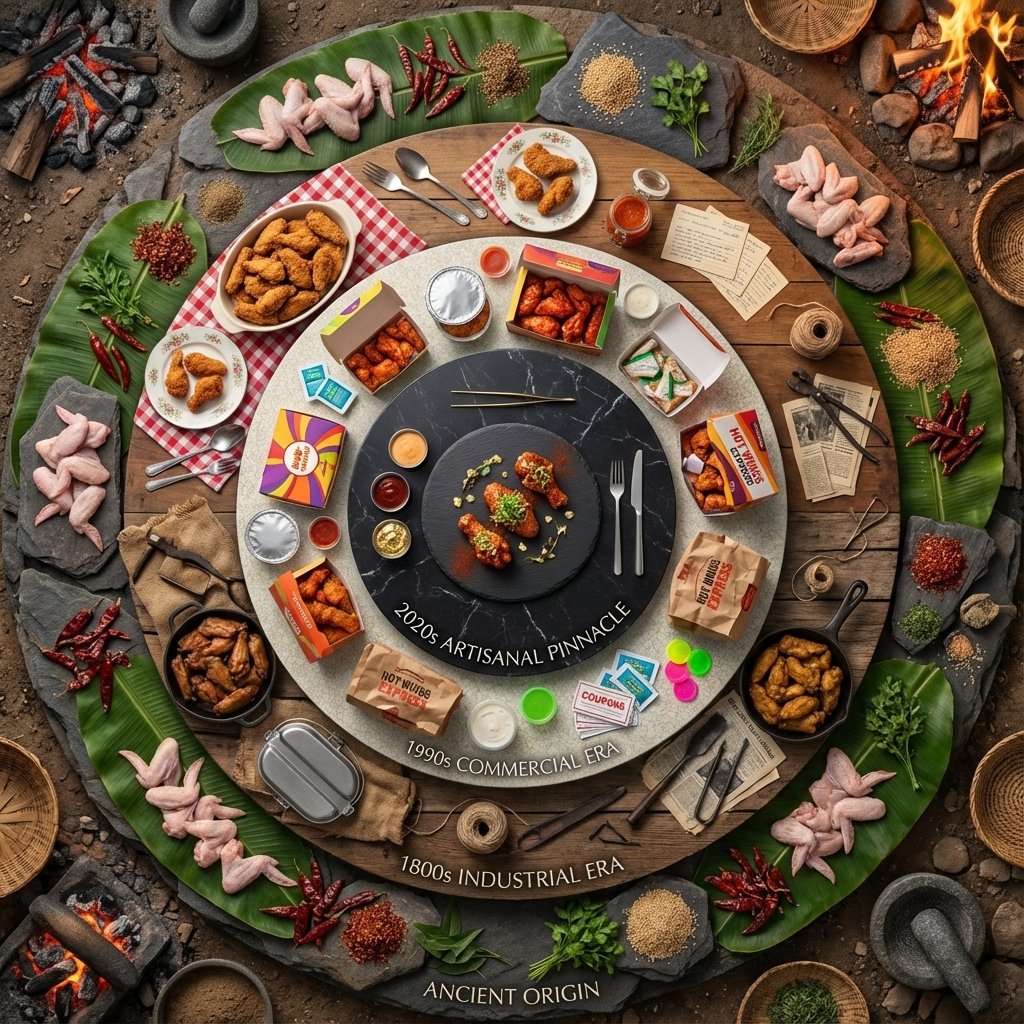
#557Use the Nano Banana Pro to visualize a miniature landscape of food history across five eras.
2026-01-08 X / Gadgetify
📝 Summary
Present a high-angle miniature landscape that depicts spicy chicken wings in five eras, along with worker figures. Emphasize hierarchical distribution, background texture, and long-shadow effects. Output as a single 1:1 image at 8K resolution.
🎨 Chinese Prompt
提示:为辣鸡翅做这个:输入变量:[插入食物](例如,炸鸡、寿司、玉米卷、咖啡)
系统指令:
生成一个超逼真的、高角度的“食物历史微缩景观”,采用曼陀罗格式排列。
**严重警告:场景必须由 1:87 比例的微型人偶(厨师)填充,这些人偶需与每个戒指所代表的具体时代相对应。**
**1. 时间线分析:**
分析输入食物的历史,以确定 5 个时代中工人的服饰和工具:
阶段 0(中心):现代厨师(白大褂、厨师帽、镊子)。
第一阶段(商业):快餐店员工(安全帽、Polo 衫、耳机)。
第二阶段(家庭):家庭厨师(花边围裙、烤箱手套)。
第三阶段(工业):屠夫/面包师(脏白围裙、砍刀、卷起袖子)。
第四阶段(古代):猎人/采集者(束腰外衣、腰布、石器、火)。
2. 构图:
视角:高角度(75 度)。并非完全平坦。我们需要看到微小人物的全身,而不仅仅是头部。
轨道:5 个清晰的同心圆。
边界(人行道):每两个圆之间有一个可见的负空间(一个细小的缝隙)。这就是微小厨师站立、向观众展示食物的地方。
3. 环与居民逻辑):
中心(现代顶峰):
食物:解构,青石上的精致摆盘。
形象:一位主厨用镊子小心翼翼地放置微小的绿色装饰。
环 1(商业时代):
食物:明亮的包装,一致性。
人物:一个青少年快餐工人,手持托盘或汽水杯,站在纸箱旁边。
环 2(家庭时代):
食物:砂锅或带图案的瓷盘。
人物:一位 1950 年代的家庭主妇或厨师,手持餐勺或派刀。
第三环(工业时代):
食物:铸铁平底锅、锡盘、丰盛的份量。
人物:一位魁梧的 19 世纪屠夫或厨师,手持一把沉重的刀或铁勺。
第四环(远古起源):
食物:在篝火旁烹饪,使用石器工具,生食材(但烤得足够香,看起来诱人)。
人物:一位古代人类照看一个小型篝火或用石头磨香料。
4. 背景形态:
人物下方的表面纹理随之变化:
中心:抛光石。
中间:乙烯基/木桌。
边缘:尘土/地球。
5. 照明与比例:
微距模糊:轻微模糊边缘,以强调人物的小比例。
阴影:人物必须投下长影在食物上,以证明他们确实站在那里。
Output: 一张图片,1:1 纵横比,8k 分辨率,微缩摄影风格。
🎨 English Prompt
do this for spicy chicken wings: Input Variable: [INSERT FOOD] (e.g., Fried Chicken, Sushi, Tacos, Coffee)
System Instruction:
Generate a hyper-realistic, high-angle "Food History Diorama" arranged in a Mandala format.
CRITICAL: The scene must be populated by Tiny 1:87 Scale Figures (Chefs) that correspond to the specific era of each ring.
1. Timeline Analysis:
Analyze the history of the Input Food to determine the Attire and Tools of the workers in 5 eras:
Stage 0 (Center): The Modern Chef (White Coat, Toque, Tweezers).
Stage 1 (Commercial): The Fast Food Worker (Visor, Polo Shirt, Headset).
Stage 2 (Domestic): The Home Cook (Floral Apron, Oven Mitts).
Stage 3 (Industrial): The Butcher/Baker (Dirty White Apron, Cleaver, Rolled Sleeves).
Stage 4 (Ancient): The Hunter/Gatherer (Tunic, Loincloth, Stone Tools, Fire).
2. The Composition :
Perspective: High Angle (75 Degrees). Not completely flat. We need to see the bodies of the tiny figures, not just their heads.
The Orbits: 5 Distinct Concentric Rings.
The Boundary (The Catwalk): Between each ring, there is a visible Negative Space (a thin gap). This is where the tiny chefs stand, presenting the food to the viewer.
3. The Rings & The Residents Logic ):
The Center (Modern Pinnacle):
Food: Deconstructed, gourmet plating on slate.
The Figure: A Master Chef carefully placing a micro-green garnish with tweezers.
Ring 1 (The Commercial Age):
Food: Bright packaging, uniformity.
The Figure: A Teenage Fast Food Worker holding a tray or a soda cup, standing next to the cardboard boxes.
Ring 2 (The Domestic Age):
Food: Casserole dishes or patterned china.
The Figure: A 1950s Housewife or Home Cook holding a serving spoon or pie cutter.
Ring 3 (The Industrial Age):
Food: Cast iron skillets, tin plates, hearty portions.
The Figure: A burly 19th Century Butcher or Cook holding a heavy knife or iron ladle.
Ring 4 (The Ancient Origin):
Food: Cooking over open fire, stone tools, raw ingredients (but cooked/charred enough to look appetizing).
The Figure: An Ancient Human tending to a mini-campfire or grinding spices with a stone.
4. The Background Morph:
The surface texture underneath the figures changes with them:
Center: Polished Stone.
Middle: Linoleum/Wood Table.
Edge: Dirt/Earth.
5. Lighting & Scale:
Tilt-Shift: Blur the outer edges slightly to emphasize the miniature scale of the people.
Shadows: The figures must cast long shadows across the food to prove they are physically standing there.
Output: ONE image, 1:1 Aspect Ratio, 8k Resolution, Miniature Photography style. Use Nano Banana Pro with
📷 Images