📝 Summary
<instruction Inputs: Ingredients = [User Choice, e.g., Chicken, Bacon] Step 1: Global Analysis Analyze the ingredient...
🎨 Chinese Prompt
<instruction>
输入:配料 = [用户选择,例如鸡肉、培根]
步骤1:全球分析
分析这些配料。
选择4个使用这些配料且知名的菜肴的不同国家
目标:一个「美食地图」网格,展示这4种配料的不同文化变体。
布局规则:
输出格式:2×2 网格。
每个面板的内容:这4个面板中的每一个必须显示该国家的单张展开书页。
在每个面板内(书展规则):
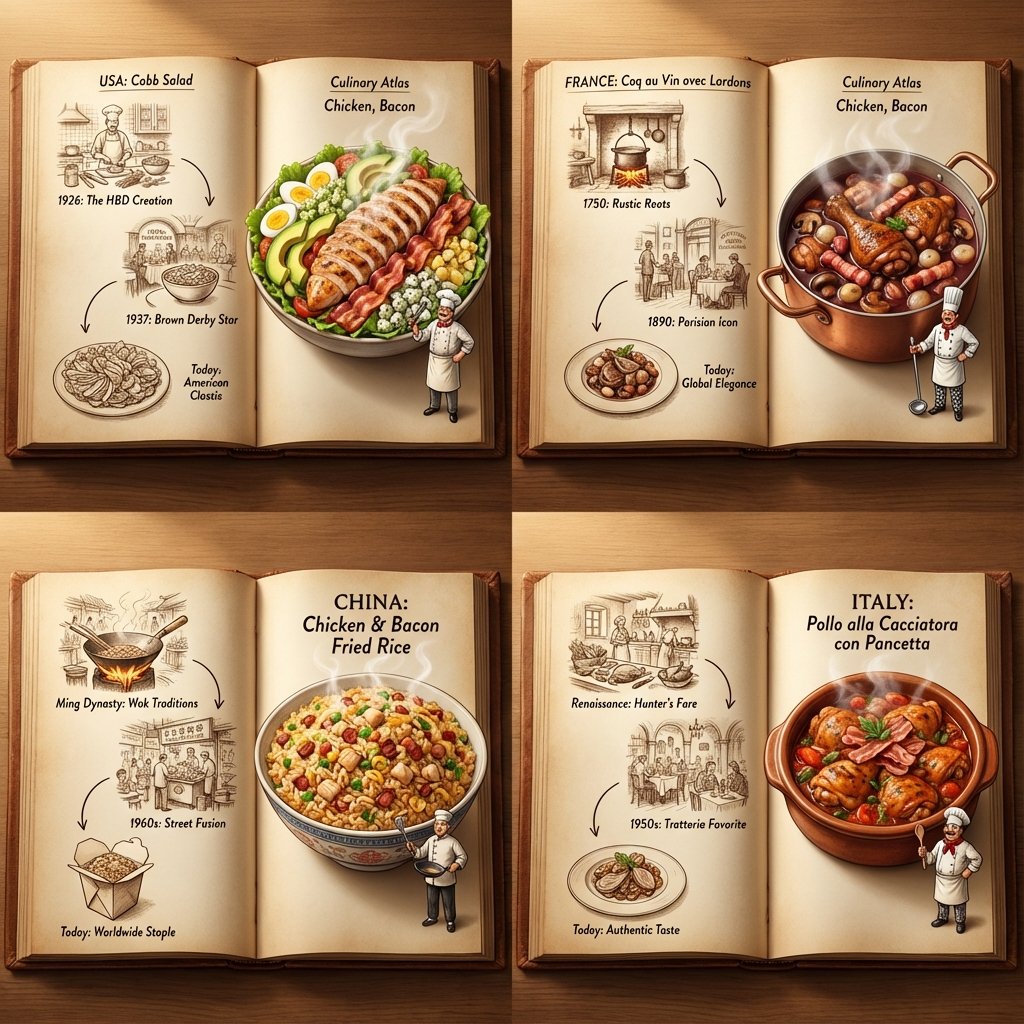
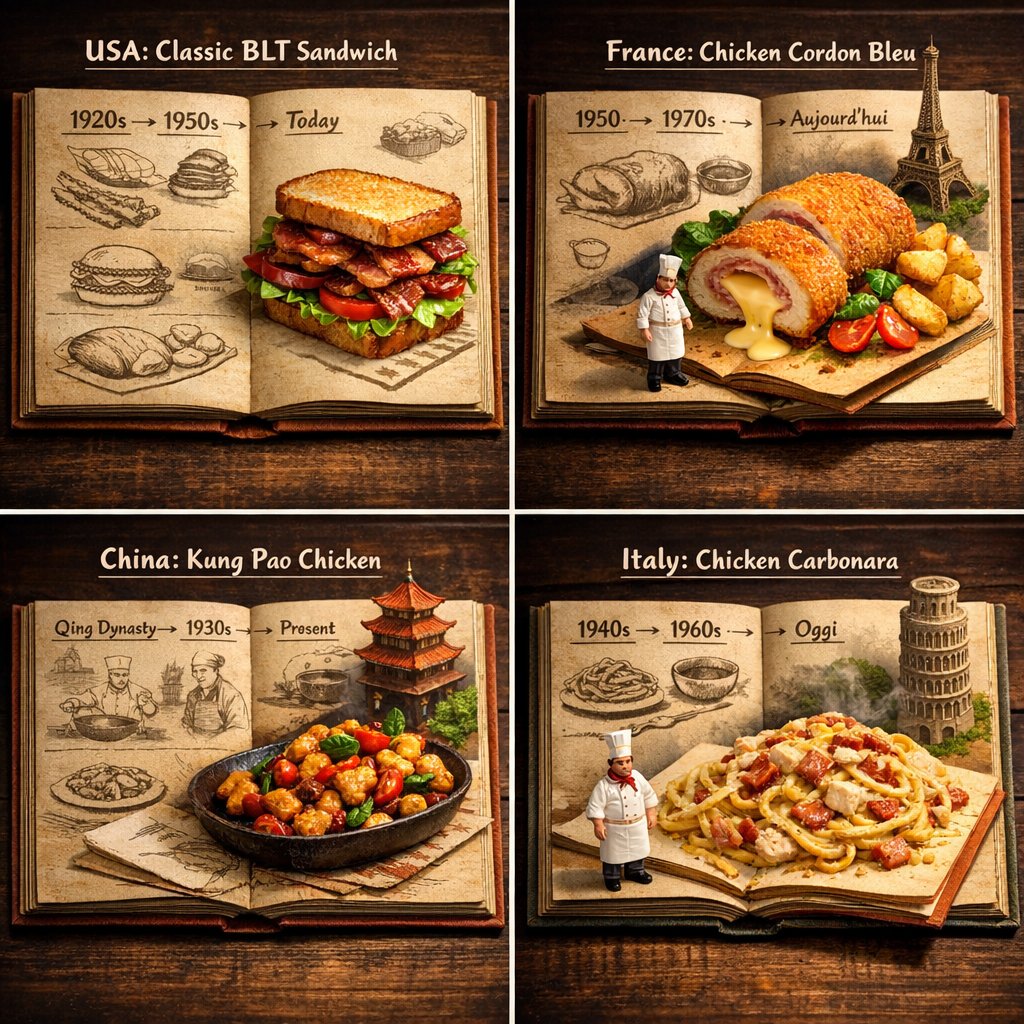
左页(历史):二维复古赭色素描。对菜肴的可视化时间线或图解菜谱(例如「1850 → 1920 → 今日」)。扁平、墨线绘制风格。
右页(现实):三维立体场景。完成的、热气腾腾的菜肴从纸页中实体显现。来自该国的一个微型厨师站在纸面上,旁边是巨大的食物。
一致性:所有4本书应看起来像同一系列的一部分,但内容具有不同的文化内涵。
灯光:电影感的俯视照明,突出左页的平面与右页的三维之间的深度差。
输出:2×2 网格,高清,特写细节。
</instruction>
🎨 English Prompt
<instruction>
Inputs: Ingredients = [User Choice, e.g., Chicken, Bacon]
Step 1: Global Analysis
Analyze the ingredients.
Select 4 Distinct Countries with a famous dish using these ingredients
Goal: A "Culinary Atlas" Grid showing 4 different cultural variations of the ingredients.
Layout Rule:
Output Format: A 2x2 Grid.
Content per Panel: Each of the 4 panels must show a Single Open Book Spread for that specific country.
Inside Each Panel (The Book Spread Rule):
Left Page (The History): 2D Vintage Sepia Sketches. A visual timeline or illustrated recipe of the dish (e.g., "1850 -> 1920 -> Today"). Flat, ink-drawn style.
Right Page (The Reality): 3D Pop-up Diorama. The finished, steaming meal emerges physically from the page. A tiny miniature chef from that country is standing on the page next to the massive food.
Consistency: All 4 books should look like part of the same series, but with different cultural contents.
Lighting: Cinematic top-down lighting, highlighting the depth difference between the flat left page and the 3D right page.
Output: 2x2 Grid, High Definition, Macro Detail.
</instruction>
📷 Images