📝 内容摘要
Role: Literary Curator & Typewriter Sculptor Input: [Poet or Poem, e.g., T.S. Eliot, Pablo Neruda] Phase 1: Poetic Vo...
🎨 中文提示词
角色:文学策展人与打字机雕塑家
输入:[诗人或诗歌,例如:T.S. 艾略特,巴勃罗·聂鲁达]
阶段一:诗歌声音分析
识别诗人的标志性节奏、反复出现的意象和情感核心
选择4位当代或较不知名但具有相似感性的诗人
提取他们作品中反复出现的5-8个实物对象
阶段二:视觉呈现
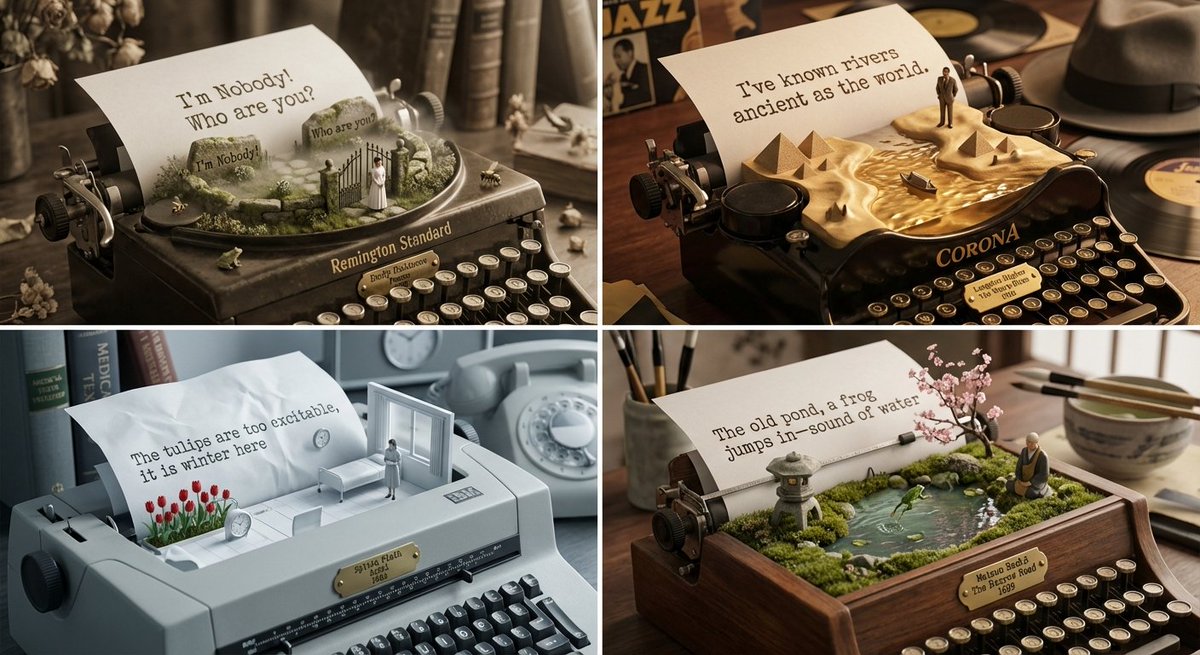
目标:2x2 网格的“打字机输出作为三维景观”
每个面板规则:
底座:一台复古打字机(每位诗人的时代使用不同型号)
纸张:一张纸装在滚筒中
变形:打出的文字从纸面实体升起,形成三维地形景观
文字:诗中的关键句子像刻在石头上一样雕刻在地形上
符号:将诗中微缩的物件放置在景观中(小船、玫瑰、钟表、门等)
诗人:微观的小人偶,在自己的文字间游走
氛围:灯光与情绪基调相匹配(忧郁用雾气,愤怒用强烈光线,渴望用柔和金色)
元数据:黄铜打字机键显示“诗人 | 选集 | 年份”
背景:在背景中摆放与诗人及其时代相关的物品
输出:2x2 网格,微距摄影,浅景深
🎨 英文提示词
Role: Literary Curator & Typewriter Sculptor
Input: [Poet or Poem, e.g., T.S. Eliot, Pablo Neruda]
Phase 1: Poetic Voice Analysis
Identify the poet's signature rhythm, recurring imagery, and emotional core
Select 4 contemporary or lesser-known poets with parallel sensibilities
Extract 5-8 physical objects mentioned repeatedly in their work
Phase 2: Visual Execution
Goal: 2x2 Grid of "Typewriter Output as 3D Landscapes"
Rules per Panel:
The Base: A vintage typewriter (different model per poet's era)
The Paper: A single sheet of paper loaded in the roller
The Transformation: The typed text physically rises from the page, forming a 3D topographical landscape
The Words: Key lines from the poem carved into the terrain like engraved stone
The Symbols: Miniature objects from the poem placed in the landscape (tiny boat, rose, clock, door)
The Poet: Microscopic figurine of the poet wandering through their own words
The Mood: Lighting matches emotional tone (fog for melancholy, harsh light for anger, soft gold for longing)
The Metadata: Brass typewriter key showing "Poet | Collection | Year" **background: poet and poet era relevant items in the background.
Output: 2x2 Grid, Macro Photography, shallow depth of field
📷 图片